Precision Surgical Care. Functional Restoration. Refined Outcomes.
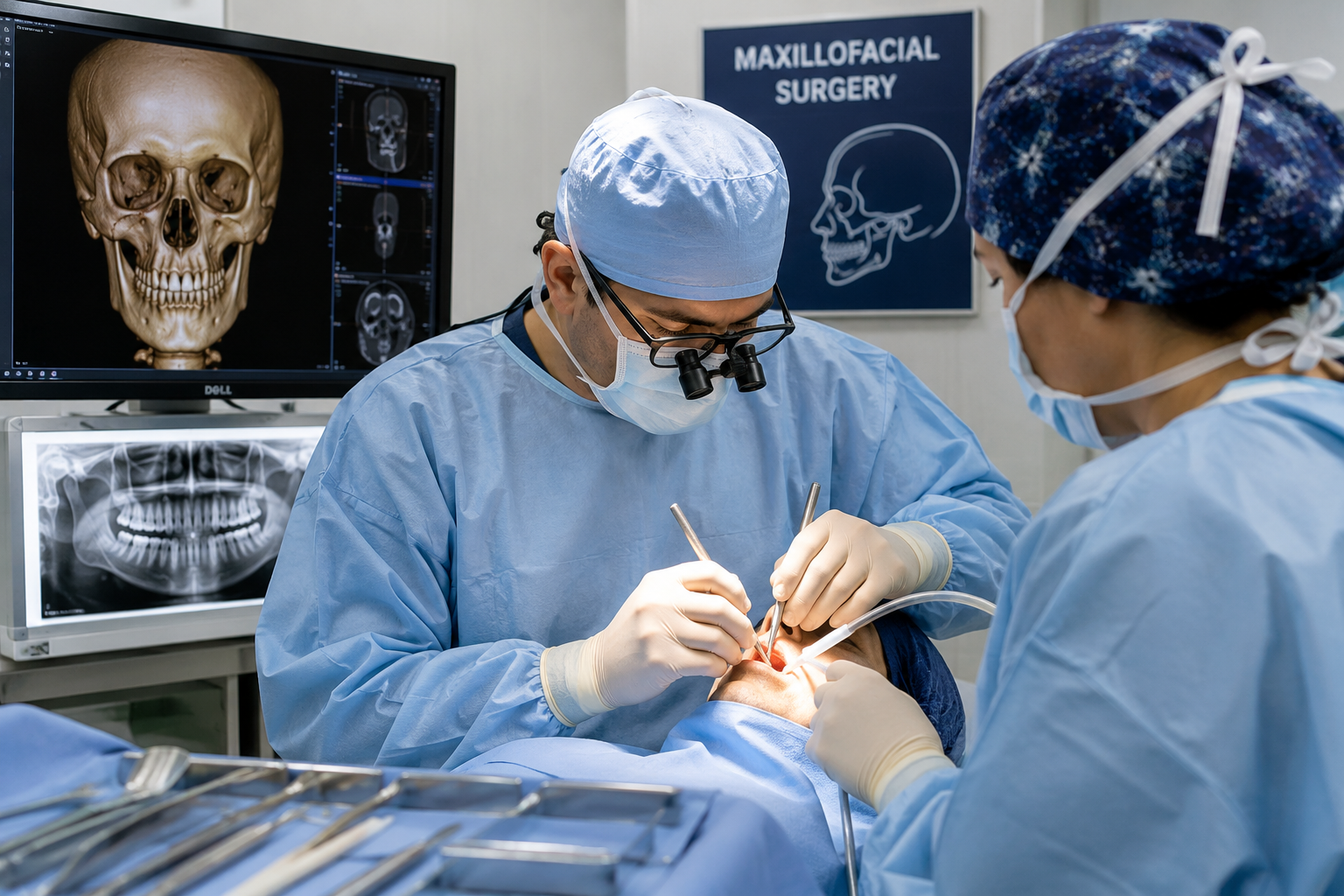
At Craft 32 Dental Care, oral and maxillofacial care is delivered with a strong emphasis on precision, safety, and long-term functional balance. Surgical procedures are recommended only when clinically necessary and are thoughtfully integrated into a comprehensive treatment plan. Our approach prioritises the preservation of natural structures, minimal intervention, and patient comfort at every stage. When advanced surgical care is required, it is supported by modern imaging technologies, meticulous planning, and a structured, safety-focused protocol — ensuring outcomes that are both clinically effective and aesthetically refined.
We provide specialised surgical management for conditions involving the face, jaw, and oral structures, including:
3D diagnostics enable precise mapping of anatomical structures, improving safety and predictability.
Tissue-preserving methods reduce trauma, swelling, and recovery time.
Each procedure is tailored to the individual, ensuring comfort and clarity throughout.
Strict adherence to international standards ensures a safe clinical environment.
Recovery timelines vary based on the procedure:
Post-operative care is carefully guided to ensure comfort, clarity, and confidence throughout recovery.
Oral and maxillofacial surgery is a specialised field focused on the diagnosis and management of conditions affecting the face, jaws, mouth, and surrounding structures. At Craft 32 Dental Care, surgical care is provided when clinically required for conditions such as impacted wisdom teeth, jaw alignment concerns, facial trauma, cysts and benign pathologies, temporomandibular joint (TMJ) disorders, and bone deficiencies requiring reconstruction. Each case is carefully evaluated using advanced imaging technologies such as OPG and CBCT scans, allowing precise diagnosis, detailed planning, and predictable, outcome-focused treatment.
Procedures are performed under appropriate anaesthesia, ensuring that patients remain comfortable throughout treatment. Some degree of post-operative discomfort may occur depending on the procedure, but it is usually mild to moderate and effectively managed with medication and guided aftercare. A minimally invasive, tissue-preserving approach is followed to reduce swelling, enhance comfort, and support smoother healing.
Recovery timelines vary based on the complexity of the procedure:
Clear post-operative guidance is provided to ensure a smooth and well-supported recovery process.
Wisdom tooth removal involves the extraction of third molars that are impacted, partially erupted, or causing complications. It is recommended in situations such as pain, swelling, infection, crowding, difficulty in maintaining hygiene, or risk of cyst formation. The procedure is performed with careful planning and precision techniques to ensure minimal trauma and efficient healing.
Orthognathic surgery is used to correct significant jaw discrepancies that affect bite function, facial balance, and overall oral health. It may be recommended in cases of severe bite issues, jaw asymmetry, or functional difficulty where orthodontic treatment alone is not sufficient. Treatment is planned in coordination with orthodontic care to achieve stable, functional, and aesthetically balanced results.
Many procedures are performed on an outpatient basis, allowing patients to return home the same day. More complex surgeries may require a short, supervised hospital stay. As with any surgical procedure, there may be minor risks such as swelling, temporary discomfort, slight bleeding, or rarely, infection or temporary nerve sensitivity. With proper planning, sterile protocols, and experienced care, these risks are minimal and well managed.
Preparation depends on the type of procedure. This may include diagnostic imaging, temporary dietary or medication adjustments, and fasting if sedation is planned. Clear, personalised pre-operative instructions are provided to ensure a safe and smooth surgical experience.
Mild to moderate swelling is a normal part of healing and usually peaks within 48–72 hours before gradually reducing. Minor bruising may occur in some cases. Appropriate care, including medication and cold compresses, helps manage these symptoms effectively.
Return to daily activities depends on the complexity of the procedure:
Individual guidance is provided based on your treatment and lifestyle.
Sutures are often placed to support healing. In most cases, dissolvable stitches are used and do not require removal. If non-dissolvable sutures are used, a follow-up visit is scheduled.
Depending on the procedure and patient comfort, treatment may be performed under local anaesthesia, conscious sedation, or general anaesthesia. The most appropriate option is discussed in advance.
Most procedures are performed inside the mouth, resulting in no visible external scars. When external approaches are necessary, techniques are carefully planned to minimise and conceal any marks.
Most surgical outcomes are designed to be long-term and stable. Procedures such as wisdom tooth removal and corrective jaw surgery provide lasting benefits when supported by proper care and follow-up.
Yes. Surgical care is often part of a comprehensive treatment plan and may be combined with orthodontic, restorative, or aesthetic procedures to achieve optimal functional and aesthetic outcomes.
Precision Surgical Care. Lasting Results.
Schedule your consultation and take the first step toward a balanced, functional, and aesthetically refined outcome.