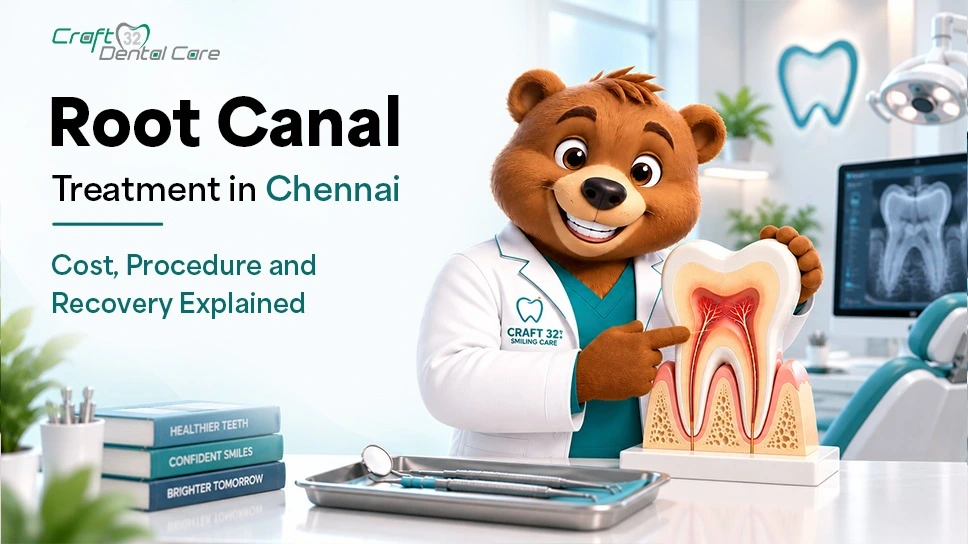
Root canal treatment (RCT) often sounds intimidating, but understanding what it actually involves can help ease the anxiety. This guide walks you through everything: the procedure, what it feels like, recovery, cost factors, and how to choose the right dentist.
What Is Root Canal Treatment?
Every tooth has a soft inner core called the pulp, which contains nerves, blood vessels, and connective tissue. When bacteria enter the tooth through a deep cavity, crack, or injury, this pulp can become infected or inflamed.
Left untreated, the infection can spread to surrounding bone and tissue. Root canal treatment also called as RCT - a procedure designed to remove the infected pulp, clean and disinfect the root canals inside the tooth, seal them, and restore the tooth so it can continue to function normally.
In most cases, a dental crown is placed over the treated tooth afterward to protect it and restore its full strength.
When Do You Need a Root Canal?
Only a dentist can confirm whether RCT is necessary, but here are common signs that warrant a dental visit:
- Persistent toothache
- Pain while chewing or biting
- Prolonged sensitivity to hot or cold food and drinks, even after the source is removed
- Swollen, tender, or darkened gums near a specific tooth
- Discolouration or darkening of the tooth itself
- A cracked or chipped tooth that has exposed the inner layers
- Recurring pimple-like swelling on the gum (dental abscess)
- A tooth that was previously injured or had a deep filling
- Unbearable persistent pain which doesn't really go away
If you notice one or more of these symptoms, avoid delaying your visit. Your dentist will examine the tooth and, if needed, take an X-ray to assess the extent of damage or infection before recommending treatment.
Root Canal Procedure: Step by Step
Here is a straightforward breakdown of how a root canal procedure typically unfolds:
- 1: Dental Examination and Diagnosis Your dentist will examine the affected tooth, review your symptoms, and take X-rays to assess the root canals and surrounding bone.
- 2: Local Anaesthesia The area around the tooth is numbed using a local anaesthetic. Most patients are comfortable throughout the procedure once the anaesthetic takes effect.
- 3: Accessing the Infected Pulp A small opening is made in the top of the tooth to access the pulp chamber below.
- 4: Cleaning and Shaping the Canals The infected or damaged pulp is carefully removed using fine instruments. The canals are cleaned and shaped to prepare them for filling.
- 5: Disinfecting the Canals The canals are thoroughly disinfected to eliminate any remaining bacteria.
- 6: Filling and Sealing The cleaned canals are filled with a biocompatible material called gutta-percha and sealed.
- 7: Temporary or Permanent Restoration Depending on the situation, a temporary filling is placed, or the tooth is restored immediately. In some cases, a second appointment may be needed.
- 8: Dental Crown Once the root canal is complete, a crown is typically recommended to protect the treated tooth and restore normal function.
Is Root Canal Treatment Painful?
This is one of the most common questions patients ask and understandably so.
Modern root canal treatment is performed under local anaesthesia, which numbs the tooth and surrounding tissue before the procedure begins. The treatment is intended to relieve the pain you are already experiencing from the infection, not add to it.
Most patients report that the procedure itself is manageable. You may experience some mild soreness or tenderness for a few days after treatment, particularly when biting down. This is normal and usually settles with prescribed or over-the-counter pain relief.
It would be inaccurate to call it completely painless. Any dental procedure involves some degree of post-treatment sensitivity, but the discomfort is generally well-controlled and temporary.
Root Canal Treatment Cost in Chennai
One of the most searched questions by patients is: how much does root canal treatment cost in Chennai?
The honest answer is that there is no single fixed price, because several factors influence what a patient will pay.
Factors That Affect Root Canal Cost in Chennai
- Type of tooth involved: Front teeth (incisors and canines) typically have fewer and simpler root canals than premolars or molars, which can make treatment comparatively more straightforward. Molars are generally more complex and may cost more.
- Number of canals: Each tooth has a different number of root canals. Molars can have three or four, increasing the time and precision required.
- Severity of infection: A more advanced infection may require additional appointments or treatment steps.
- Retreatment cases: If a previously root-canal-treated tooth develops a new infection, retreatment is more involved and may be priced differently.
- Diagnostic imaging: X-rays or advanced imaging used to plan treatment add to the overall cost.
- Type of final restoration: Whether a tooth-coloured filling, metal crown, ceramic crown, or zirconia crown is used will significantly affect the total cost.
- Number of appointments required
Rather than relying on figures found online which may not reflect what your specific tooth needs, it is best to visit a dental clinic for an examination and a personalised treatment estimate.
Considering root canal treatment? Book a consultation at Craft32 Dental in Chennai to get a clear picture of your treatment options and costs.
How Many Sittings Does a Root Canal Take?
This depends on the individual case. Some root canal treatments can be completed in a single appointment, while others may require two or more visits.
Factors that influence the number of sittings include:
- The severity and extent of the infection
- Tooth anatomy and canal complexity
- Whether the infection has spread beyond the tooth
- The dentist's clinical findings during treatment
Your dentist will advise you on the likely number of appointments after evaluating your tooth.
Root Canal Recovery: What to Expect
Recovery after root canal treatment is usually straightforward. Here is what to keep in mind:
- Mild tenderness or soreness is common for a few days, particularly when biting. This usually responds well to prescribed pain medication.
- Avoid hard or crunchy foods on the treated tooth until the permanent restoration is in place.
- Do not apply excessive pressure to the tooth during this period.
- Maintain normal oral hygiene brush and floss gently around the area.
- Complete all follow-up appointments most importantly, getting the crown placed as recommended.
- Take any prescribed antibiotics or pain relief as directed.
Skipping the final crown after RCT is one of the most common reasons root canal-treated teeth fail. The crown protects the tooth from fracture and reinfection.
What to Eat After Root Canal Treatment
For the first day or two after treatment, stick to softer foods such as:
- Yoghurt, curd, or dal
- Soft idli or upma
- Mashed vegetables
- Soups and porridge
Avoid very hard, crunchy, or sticky foods on the treated tooth until your dentist confirms the tooth has been fully restored. Hot and cold extremes may also cause temporary sensitivity.
How Long Does a Root Canal-Treated Tooth Last?
A root canal-treated tooth can last many years when properly restored and cared for. Longevity depends on:
- The quality of the root canal treatment
- Timely placement of a crown or permanent restoration
- Your oral hygiene habits
- Overall gum health
- Remaining natural tooth structure
- Regular dental check-ups
There is no guarantee that any tooth will last a fixed number of years outcomes vary by individual, but completing treatment properly and maintaining good oral care gives you the best chance of a lasting result.
Root Canal vs Tooth Extraction: Which Is Better?
When a tooth is severely infected or damaged, patients sometimes ask whether extraction is a simpler solution.
While extraction may be necessary in certain situations, preserving your natural tooth is generally the preferred approach when it is clinically possible. Natural teeth function better for chewing, speech, and maintaining jaw bone density. Replacing an extracted tooth with an implant or bridge involves additional procedures and cost.
A qualified dentist will evaluate the condition of your tooth and recommend the most appropriate option for your situation.
Why Early Treatment Matters
Delaying treatment when you have persistent tooth pain, swelling, or sensitivity can allow infection to spread to surrounding teeth, gum tissue, or bone. What might have been a straightforward root canal can become a more complex, costly problem over time.
Over-the-counter pain relief may reduce discomfort temporarily, but it does not address the underlying infection. If you have been putting off a dental visit, it is worth getting assessed sooner rather than later.
Choosing a Dentist for Root Canal Treatment in Chennai
When looking for a root canal dentist in Chennai, here are some things worth considering:
- Does the clinic conduct a thorough clinical examination before recommending treatment?
- Are X-rays or imaging available to accurately diagnose the condition?
- Does the dentist take time to explain the procedure, steps, and expected outcomes clearly?
- Are sterilisation and infection control protocols followed?
- Is there a transparent treatment plan with a clear cost estimate?
- Does the clinic offer post-treatment follow-up?
These factors matter more than pricing alone when it comes to a procedure like RCT.
Why Consider Craft32 Dental?
At Craft32 Dental, the focus is on understanding each patient's situation before recommending treatment. Whether you have come in with tooth pain you have been ignoring or you have already been told you need a root canal, the approach starts with a proper evaluation — not a one-size-fits-all recommendation.
Patients receive a clear explanation of what is happening with their tooth, what the treatment involves, and what their options are. The goal is to preserve natural teeth wherever it is clinically appropriate, and to ensure patients leave with a complete, lasting restoration — not just a half-finished procedure.
Craft32 Dental is accessible for patients across Chennai looking for a root canal specialist in Chennai they can trust with a clear treatment plan.
Frequently Asked Questions
Conclusion
Root canal treatment has a reputation that is far worse than the reality. With modern techniques and anaesthesia, the procedure is generally well-tolerated and, most importantly, it can save a tooth that would otherwise need to be removed.
If you are dealing with persistent tooth pain, sensitivity, swelling, or have already been advised to undergo root canal treatment in Chennai, the most important step is getting a proper dental evaluation.
Experiencing tooth pain, sensitivity, or swelling? Schedule a consultation with Craft32 Dental in Chennai to find out whether root canal treatment is the right option for your tooth.