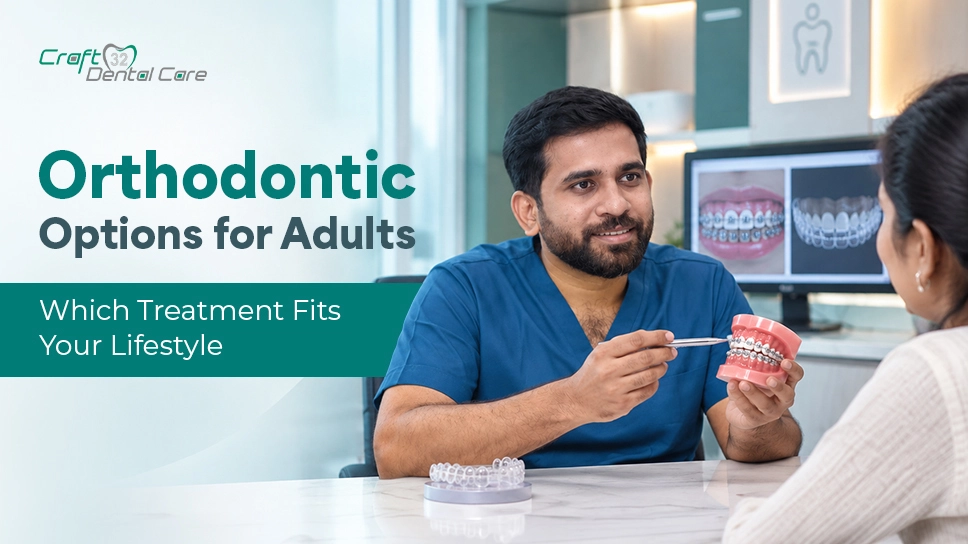
Thinking about straightening your teeth but wondering how treatment will fit around your work, meetings and family commitments? You may prefer something less noticeable, worry about changing your eating habits or wonder whether you have left it too late.
Orthodontic treatment is an option for many adults. Whether you have crowded teeth, noticeable gaps or a bite that feels uncomfortable, an orthodontic assessment can help you understand what can be improved.
Choosing between braces and clear aligners involves more than appearance. Your dental health, daily routine, treatment goals and ability to follow care instructions all matter.
If you are exploring orthodontic options for adults in Chennai, this guide from Craft 32 Dental Care explains the main choices and the practical questions to consider before starting.
Why Do Adults Consider Orthodontic Treatment?
Adults seek orthodontic care for different reasons. Some could not have treatment during childhood. Others notice that their teeth have shifted years after wearing braces.
You may also want to address a concern that affects everyday activities, such as difficulty cleaning overlapping teeth or discomfort when biting into food.
Common reasons for seeking an assessment include:
- Crowded or overlapping teeth.
- Gaps between teeth.
- Protruding front teeth.
- Upper and lower teeth that do not meet properly.
- Teeth that have moved after previous orthodontic treatment.
- Difficulty cleaning certain areas because of tooth position.
Treatment may improve tooth alignment, smile appearance and bite function. However, the benefits you can expect depend on your specific dental condition.
Can Adults Get Braces at Any Age?
Age alone does not determine whether you can have orthodontic treatment. Adults in their 30s, 40s, 50s and beyond may be suitable candidates.
Your orthodontist needs to assess the health of your teeth, gums and supporting bone before recommending treatment. Existing problems, such as untreated cavities or active gum disease, may need attention first.
Previous dental work also matters. If you have crowns, bridges, implants or missing teeth, mention these during your consultation. They can influence how treatment is planned.
The starting point is a complete assessment of your oral health and the changes you would like to achieve.
What Are the Main Orthodontic Options for Adults?
Metal Braces
Metal braces use brackets attached to the teeth and connecting wires to guide gradual tooth movement. They remain fixed throughout treatment and can address a wide range of alignment and bite problems.
They may appeal to adults who prefer an appliance they do not need to remove and reinsert throughout the day.
However, metal brackets are visible. You will also need to clean carefully around the appliance and follow advice about foods that could damage it.
Lifestyle consideration: Fixed braces remove the need to track daily appliance wear time, but they still require consistent cleaning and attendance at appointments.
Ceramic Braces
Ceramic braces use clear or tooth-coloured brackets that blend more closely with your teeth. Like metal braces, they remain attached during treatment.
They may suit adults who want a less noticeable fixed appliance. However, the wires and other components may still be visible.
Ask your orthodontist to explain how the complete appliance will look and what care it needs.
Lifestyle consideration: Ceramic braces may appeal to people who regularly attend meetings or interact with clients and prefer subtler brackets.
Clear Aligners
Clear aligners are transparent, removable trays designed to fit your teeth. A prescribed series of trays gradually guides tooth movement.
You remove them for meals and cleaning. This flexibility can be useful, but successful treatment depends on wearing them consistently.
A typical prescription involves around 22 hours of daily wear, although you should follow your orthodontist’s specific instructions. Leaving trays out for long periods can affect progress.
Clear aligners are not suitable for every case. Some tooth movements may be managed more predictably with fixed braces or a combination of approaches.
Lifestyle consideration: Aligners may suit adults who want a discreet appliance and can maintain a consistent routine around meals, cleaning and wear time.
Braces or Clear Aligners – Which Fits Your Daily Routine?
The most suitable appliance must meet your clinical needs. Once your orthodontist identifies suitable options, your lifestyle can help guide the final choice.
| Consideration | Fixed braces | Clear aligners |
|---|---|---|
| Appearance | Varies with bracket material and placement | Transparent trays offer a discreet appearance |
| Removal | Remain attached to the teeth | Removed for meals and cleaning |
| Daily responsibility | Careful cleaning around brackets and wires | Consistent wear time and tray cleaning |
| Eating habits | Some foods need to be avoided or adapted | Meals require removal and reinsertion |
| Follow-up care | Regular monitoring and adjustments | Regular monitoring of fit and tooth movement |
If You Attend Meetings or Work With Clients?
Explain how much appliance visibility matters to you. Ask to see examples of the recommended options so you understand how they might look during normal conversation.
Avoid choosing based only on photographs of an appliance. Your treatment may involve additional components that affect its appearance.
If You Frequently Snack or Drink Tea and Coffee
Think about how often you eat or drink during the working day. With aligners, repeated removal can make it harder to achieve the prescribed wear time.
Discuss how to manage your habits before starting, especially if you regularly sip drinks over several hours.
If You Travel Often
Ask how follow-up appointments will fit around your travel schedule. You should also understand what to do if a bracket breaks, a tray is lost or an appliance becomes uncomfortable while you are away.
For orthodontic treatment in Chennai, consider how easily you can reach the clinic from your home or workplace. A manageable journey can help you attend appointments consistently.
What Happens Before Adult Orthodontic Treatment?
Treatment planning begins with understanding your concerns and examining your oral health.
Your orthodontist may assess:
- The position of your teeth.
- How your upper and lower teeth meet.
- Gum health and the support around your teeth.
- Previous dental treatment.
- Any dental problems that need attention first.
Photographs, scans or impressions, and X-rays may be recommended when clinically indicated.
This is also your opportunity to discuss your expectations. Explain whether your main concern is crowding, gaps, appearance or how your teeth function.
A useful consultation should leave you understanding the proposed treatment, its limitations, the expected commitments and the alternatives available.
How Long Does Adult Orthodontic Treatment Take?
There is no single timeline that applies to every adult.
A small alignment correction may require less time than treatment involving several teeth and a complex bite problem. Your oral health, the movements required and your response to treatment also influence the duration.
Following instructions matters. Missed appointments, broken appliances or inconsistent aligner wear can affect progress.
If you have a wedding, relocation or another important event approaching, mention it during your consultation. Ask what is realistically achievable within that period.
Choose treatment based on a suitable clinical plan rather than a promise of unusually fast results.
How Much Does Adult Orthodontic Treatment Cost in Chennai?
The cost depends on your individual treatment needs. Appliance type, case complexity, duration and additional dental care can influence the overall amount.
An assessment is necessary before you can receive a meaningful estimate.
When discussing treatment with Craft 32 Dental Care, ask:
- What is included in the quoted fee?
- Are diagnostic records and follow-up appointments included?
- Are retainers charged separately?
- How are replacement appliances or additional treatment stages charged?
- Are instalment options available, and what are the terms?
Understanding the complete fee helps you compare options and plan your budget. A lower starting price may not describe the full cost of care.
How Do You Care for Your Teeth During Treatment?
Caring for Fixed Braces
Brush carefully around brackets and along the gumline. Your dental team may recommend interdental brushes or other tools to help clean difficult areas.
Hard or sticky foods can damage brackets and wires. Follow your orthodontist’s advice about what to avoid and which foods to cut into smaller pieces.
Continue routine dental check-ups throughout treatment.
Caring for Clear Aligners
Clean your aligners as instructed and maintain regular brushing and cleaning between your teeth
Store trays in their protective case when they are out of your mouth. Leaving them on a table or wrapping them in a tissue makes them easier to lose or damage.
Follow the prescribed tray-change schedule and contact the clinic if an aligner no longer fits properly.
Common Questions
Explore Your Options With Craft 32 Dental Care in Chennai
The right treatment starts with understanding your teeth, your goals and the routine you can maintain.
When comparing orthodontic options for adults, consider appearance alongside cleaning, appointments, wear requirements and the complete treatment cost.
Discuss your concerns with Craft 32 Dental Care in Chennai and ask which approaches are suitable for your needs. Understanding your options can help you take the next step with greater confidence.
Book an orthodontic consultation with Craft 32 Dental Care in Chennai to discuss your smile goals and treatment options.